
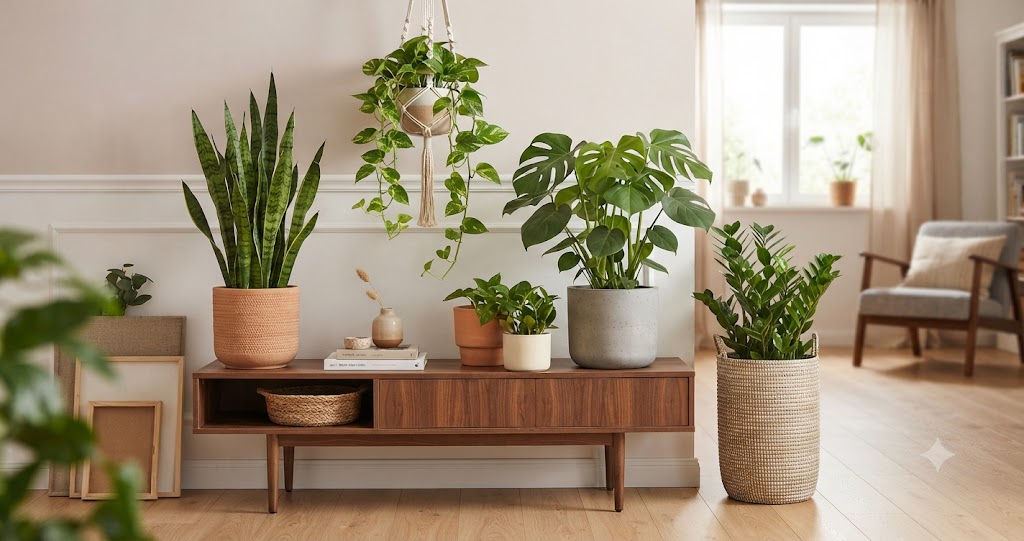
Selecting the right indoor plants does more than fill empty corners—it transforms your home’s ecosystem, air quality, and psychological ambiance. To master home decoration with greenery, you must move beyond simple “low-maintenance” lists and understand the synergy between plant biology, interior design, and your unique living environment.
Key Takeaways
- Design-First Selection: Treat plants as architectural elements. Use tall, upright plants (like Snake Plants) for height and trailing vines (like Pothos) for depth.
- Micro-Climate Matching: Never buy a plant based on looks alone. Match the plant’s natural habitat (light/humidity) to your room’s specific “micro-climate.”
- The Power of Grouping: Cluster plants in odd numbers (3s, 5s) to create visual interest and localized humidity.
- Practical Troubleshooting: Most plant failures stem from over-watering, not neglect. Always check soil moisture before adding water.
Understanding Plant Entities & Design Utility
When decorating, think of plants as “living furniture.” You are managing light, texture, and volume.
| Plant Type | Design Purpose | Ideal Placement |
| Architectural | Creates vertical focal points | Corners, entryway, next to sofas |
| Trailing/Vine | Adds softness to hard lines | High shelves, macramé hangers |
| Bushy/Voluminous | Fills empty voids | Coffee tables, plant stands |
The “Micro-Climate” Framework: A Strategic Approach
Before placing a plant, you must assess the “Environmental Load” of the room. This prevents the common trap of putting light-hungry plants in dark corners.
The Low-Light Challenge
Many homes have “dead zones”—corners with minimal natural light.
- The Strategy: Use “resilience-first” species.
- Top Picks: Zamioculcas zamiifolia (ZZ Plant) or Sansevieria. These plants utilize specialized rhizomes to store water, allowing them to remain aesthetic even in challenging light.
The High-Humidity Oasis
Bathrooms and kitchens often experience fluctuating humidity levels, which can be fatal for desert-adapted plants but heavenly for tropical species.
- The Strategy: Leverage the ambient moisture.
- Top Picks: Ferns, Orchids, or the Peace Lily. These act as natural dehumidifiers and thrive in the spa-like atmosphere of a bathroom.
Advanced Troubleshooting: Identifying “Silent Stressors”
When a plant begins to decline, the cause is rarely mystery-based; it is typically a failure in the maintenance loop.
- The “Over-Kindness” Trap: Beginners often over-water. The root system needs oxygen as much as water. If the soil remains saturated, the roots suffocate.
- Light Deficit: If your plant is “legging out” (stretching long stems with few leaves), it is desperate for more lumens. Move it closer to the window, but monitor for leaf scorching.
The Hierarchy of Plant Selection
| Plant Name | Light Requirement | Maintenance Level | Decorative Strength |
| Snake Plant | Low to Bright | Minimal | Modern, Upright |
| Pothos | Moderate | Easy | Cascading, Soft |
| Monstera | Bright Indirect | Moderate | Tropical, Bold |
| ZZ Plant | Low to Bright | Minimal | Polished, Waxy |
Frequently Asked Questions
Q: Can I really purify my air with indoor plants?
A: While plants do process toxins like benzene and formaldehyde, you would need a small jungle to significantly impact air quality in a standard room. Treat the air-purifying benefit as a bonus, not a replacement for ventilation.
Q: How do I know when to repot a plant?
A: Look for “root-bound” signs: roots growing out of the drainage holes or the plant drying out much faster than usual. When in doubt, gently lift the plant from its pot; if the roots are circling the base tightly, it is time to upgrade the vessel.
Q: Are indoor plants safe for my home?
A: Many popular decorative plants (like the Peace Lily or Monstera) can be toxic if ingested by pets. Always verify the toxicity levels of your specific species if you have curious animals or small children.
Disclaimer: This guide is intended for educational purposes. Always research the specific needs and toxicity profiles of any plant species before bringing them into your home.