
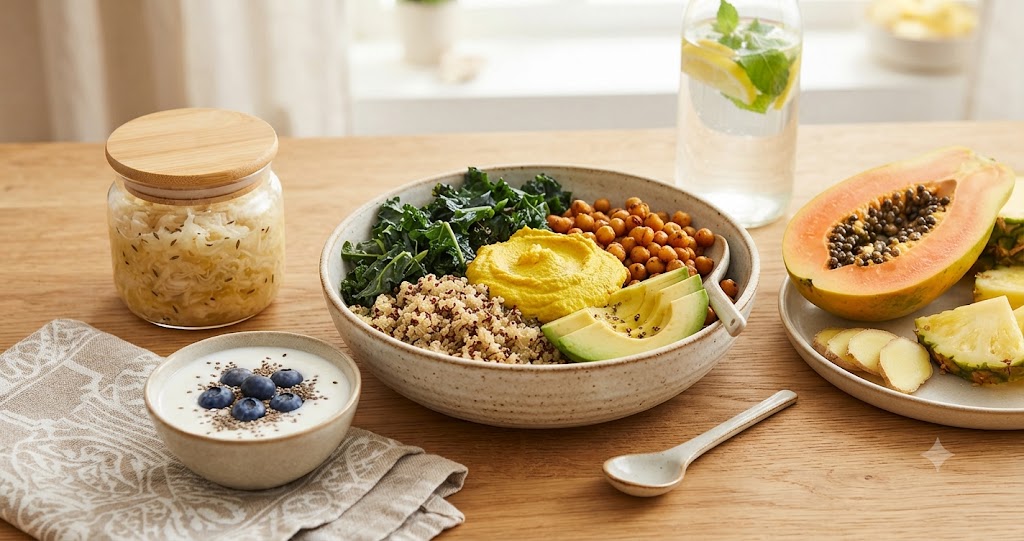
Improving your digestion naturally centers on balancing your gut microbiome, reducing inflammation, and optimizing nutrient absorption through high-fiber, enzyme-rich, and probiotic foods. By prioritizing whole, unprocessed ingredients like fermented vegetables, ginger, and papaya, you can significantly enhance gut motility and alleviate common digestive distress.
The Gut-Health Connection: Why What You Eat Matters
Your digestive system is an intricate biological engine. When you feed it the right fuel, you experience steady energy, better mood, and a robust immune system. When you don’t, you encounter sluggishness, bloating, and discomfort.
In practice, this means shifting from a reactive approach—where you treat symptoms like heartburn or bloating after they occur—to a proactive, nourishment-based strategy. Digestion begins in the mouth, but the heavy lifting happens in the stomach and intestines. Providing your body with specific catalysts, such as digestive enzymes and prebiotic fibers, allows your system to process food with far less stress.
High-Impact Foods for Optimal Digestive Function
To truly transform your digestion, you need to categorize your intake into three functional groups: fiber-rich promoters, enzyme-boosters, and probiotic-heavy restorers.
1. The Powerhouse of Fermented Foods
Fermented foods are the gold standard for gut health. They contain live bacteria that populate your microbiome.
- Sauerkraut: Raw, unpasteurized sauerkraut is packed with probiotics.
- Kimchi: A spicy, fermented cabbage that adds beneficial bacteria and dietary fiber.
- Kefir: A fermented milk drink that often contains a more diverse range of probiotics than standard yogurt.
| Food Item | Primary Benefit | Best Time to Consume |
| Sauerkraut | High Probiotic Count | Lunch or Dinner |
| Kimchi | Enzymatic Support | With main meals |
| Kefir | Microbiome Diversity | Breakfast or Snack |
2. Enzyme-Dense Superfoods
Sometimes the bottleneck in your digestion is the lack of specific enzymes required to break down proteins or starches.
- Papaya: Contains papain, an enzyme that specifically helps break down tough protein fibers.
- Pineapple: Contains bromelain, which aids in protein digestion and reduces systemic inflammation.
- Ginger: Stimulates stomach enzymes and accelerates gastric emptying, moving food from the stomach to the small intestine faster.
Structuring Your Digestive Protocol: A Framework for Success
You cannot “hack” digestion with one meal. You need a systemic approach. When deploying this, consider the following 3-step execution framework.
Step 1: Prep the Digestive Track
Before every meal, focus on the “rest and digest” state. If you are eating under stress, your body diverts blood away from the gut to your muscles.
- Action: Take three deep, diaphragmatic breaths before your first bite.
- Why: This activates the parasympathetic nervous system, which is essential for producing stomach acid and digestive enzymes.
Step 2: The “Fiber Stacking” Technique
A common bottleneck is increasing fiber too quickly, which leads to gas.
- Action: Increase your soluble fiber intake—found in oats, apples, and carrots—gradually over 14 days.
- The Nuance: Soluble fiber turns into a gel, slowing down transit time and allowing better nutrient absorption, whereas insoluble fiber (found in skins and whole grains) adds bulk.
Step 3: Troubleshooting Common Digestive Bottlenecks
When you hit a wall—such as persistent bloating—follow this audit:
- Check for “Hidden” Triggers: Are you consuming artificial sweeteners? These often act as osmotic laxatives that cause gas.
- Hydration Timing: Are you drinking massive amounts of water during the meal? This can dilute your stomach acid. Try to front-load your hydration 30 minutes before eating.
- Chewing Mechanics: Are you chewing until the food is liquid? If you swallow large chunks, your stomach has to work twice as hard to break them down, leading to stagnation.
Comparative Analysis: Fiber Sources for Digestion
| Source Type | Examples | Digestive Effect |
| Soluble Fiber | Chia seeds, Flax seeds | Softens stool, supports beneficial bacteria |
| Insoluble Fiber | Broccoli, Cauliflower | Provides bulk, speeds up transit time |
| Prebiotic Fiber | Garlic, Onions, Leeks | Feeds existing healthy gut bacteria |
Advanced Troubleshooting: When Food Isn’t Enough
If you have optimized your intake and are still struggling, look at your lifestyle context.
“In practice, this means looking at your sleep-wake cycle. The gut-brain axis is bidirectional. If your circadian rhythm is disrupted, your gut lining’s ability to repair itself overnight is significantly compromised.”
[Internal Link: The Impact of Sleep on Gut Microbiome]
Beyond food, movement is your primary motility tool. A 15-minute walk after your largest meal of the day is often more effective for reducing bloating than any supplement. It provides a gentle physical “massage” to the intestines, encouraging peristalsis.
[External Link: The Science of Gut Motility and Exercise]
Key Takeaways
- Don’t ignore fermentation: Daily servings of sauerkraut or kefir are non-negotiable for a diverse microbiome.
- Mind your enzymes: Use papaya and ginger to support your body’s natural chemical breakdown process.
- Slow down the intake: The speed at which you eat determines how much air you swallow and how effectively your stomach can begin the process.
- Fiber is not one-size-fits-all: Balance your soluble and insoluble fiber to avoid discomfort while improving transit time.
Comprehensive FAQ: Natural Digestion
Does drinking water during meals hurt digestion?
For most, a glass of water is fine. However, if you have low stomach acid, drinking large quantities of water during a meal can dilute the digestive juices needed to break down proteins.
Why does fiber make me bloated?
If you introduce high-fiber foods too rapidly, your gut bacteria have to work overtime to ferment the sudden increase in substrate. This creates gas. Always increase fiber intake incrementally.
Is coffee good or bad for digestion?
Coffee is a stimulant that increases gastric motility. For some, it helps regularity; for others, it can irritate the lining of the stomach or trigger acid reflux. Monitor your reaction closely.
How long does it take for diet changes to show results?
You should notice changes in bowel habits within 3 to 7 days, but significant shifts in microbiome composition typically take 4 to 6 weeks of consistent dietary adherence.
What is the “best” time to eat for digestion?
Consistent timing is more important than specific hours. When you eat at the same times each day, your body anticipates the meal and prepares the necessary digestive secretions in advance.