
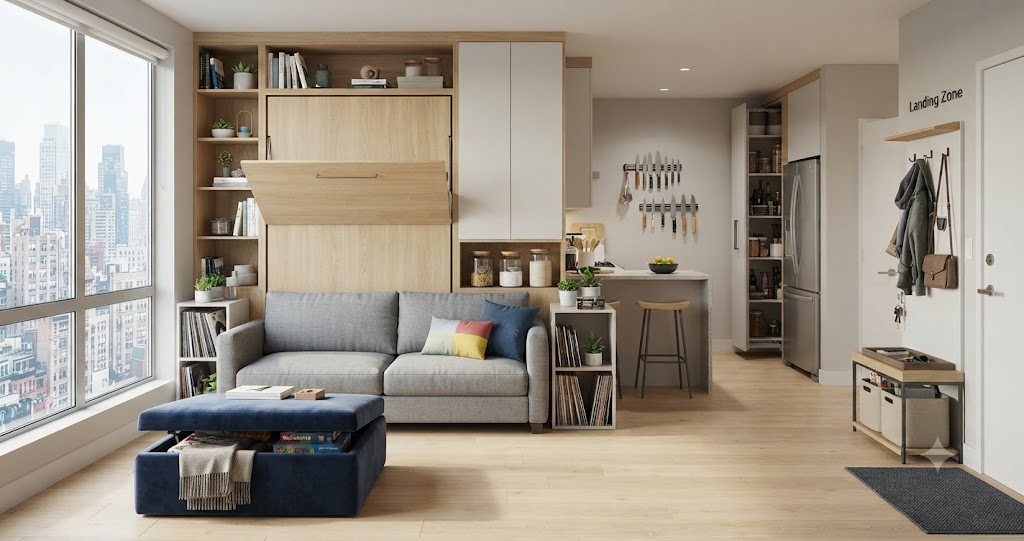
Living in a compact apartment doesn’t mean sacrificing organization or aesthetics. By utilizing vertical space, multi-functional furniture, and hidden storage zones, you can transform a cramped studio into a streamlined, highly functional home. This guide provides actionable strategies to reclaim your floor space and eliminate daily clutter.
The Foundations of Small-Space Efficiency
When you approach small-apartment living, the primary objective is to stop viewing furniture as single-purpose objects. Every item must serve at least two functions: comfort and storage.
- Verticality is Non-Negotiable: If your floor is full, look to the walls.
- The “One-In, One-Out” Rule: Maintain a strict inventory balance.
- Hidden Utility: Use furniture that conceals belongings out of sight.
- Dead Space Reclamation: Corners and ceiling perimeters are often overlooked.
Strategic Furniture Selection
In a small footprint, your furniture acts as the skeleton of your storage strategy. Avoid pieces that sit flush on the floor; elevated furniture creates a visual sense of openness, making a room feel larger while providing space for low-profile bins underneath.
| Furniture Type | Storage Function | Best Placement |
| Ottoman with Lid | Linens, books, or tech gear | Living area center |
| Bed with Drawers | Seasonal clothing/bedding | Bedroom focal point |
| Console Table | Media/Entryway clutter | Hallways or entry zones |
| Nesting Tables | Occasional surface space | Living room corners |
Mastering Vertical Storage Zones
The most under-utilized asset in any apartment is the upper two-thirds of your walls. When deploying wall-mounted systems, you must consider structural limitations and weight distribution.
1. Floor-to-Ceiling Shelving
Instead of standard mid-height bookcases, install custom or modular floor-to-ceiling units. This draws the eye upward, accentuating ceiling height rather than emphasizing narrow floor space. Place frequently accessed items at eye level, while using the top shelves for long-term storage of sentimental items or seasonal décor.
2. Over-the-Door Solutions
Doors are prime real estate. Replace standard hooks with deep, tiered over-the-door rack systems. In the kitchen, these hold spices or pantry staples; in the bathroom, they accommodate cleaning supplies or toiletries that would otherwise clutter your vanity.
The Hidden Architecture: Micro-Organization
When major furniture pieces are in place, the true “magic” happens in the micro-zones. This is where you optimize small-scale storage to prevent “junk drawer” syndrome.
Kitchen and Bathroom Optimization
In kitchens, use magnetic strips for knives and tools to clear drawer space. In bathrooms, utilize tiered rotating organizers (Lazy Susans) under the sink. This allows you to access items at the back of the cabinet without knocking over everything in the front.
The “Dead Space” Audit
Look for the awkward gaps: the 5-inch gap beside your refrigerator, the space above your door frames, or the area under your bed. These are perfect for narrow rolling carts or custom shallow shelving.
| Problem Area | Solution | Implementation Difficulty |
| Under-Bed Gap | Rolling shallow bins | Low |
| Wall Corners | Floating corner shelves | Medium |
| Above Door Frames | Custom shallow ledge | High |
Advanced Troubleshooting: When Systems Fail
If you find yourself still struggling with clutter, your system likely lacks a “landing zone.” In a small apartment, items often migrate because they do not have a dedicated, accessible home.
The “Landing Zone” Protocol:
Create a designated area within three feet of your front door. This must include a tray for keys, a hook for bags, and a hidden bin for incoming mail. If items do not have a place to “land” the moment they enter your home, they will inevitably end up on your kitchen table or sofa.
Managing Visual Noise:
Even if you have plenty of storage, open shelves can look chaotic. Use uniform, opaque baskets for open shelving. This keeps the space organized while preventing the “visual weight” of mismatched objects from making the room feel smaller.
Frequently Asked Questions
What is the best way to store seasonal items in a studio?
Vacuum-seal bags are your best friend. They reduce soft goods like winter coats and spare duvets by 75% in volume, allowing you to slide them into the shallowest gaps under your bed or on top-tier shelves.
How do I handle storage in a rental where I cannot drill holes?
Utilize heavy-duty tension rods and adhesive-backed hooks designed for high weight capacities. Tension rods can be placed inside cabinets to create extra hanging space for spray bottles or cleaning tools without damaging walls.
How can I store books without cluttering a small room?
Install floating shelves in unexpected places, such as around a window frame or in the narrow space behind a door. This turns your collection into a design feature rather than a source of clutter.
Should I use transparent or opaque storage containers?
Use opaque containers for items that create visual clutter (like wires, medicine, or office supplies). Use transparent containers only for items you use daily, as seeing the contents of a container can sometimes contribute to the feeling of a “busy” room.
What is the most common mistake when organizing small spaces?
Over-buying storage bins. Never buy the containers before you have decluttered your space and measured your specific areas. Trying to force-fit “organizers” into a space they weren’t designed for usually wastes more room than it saves.