
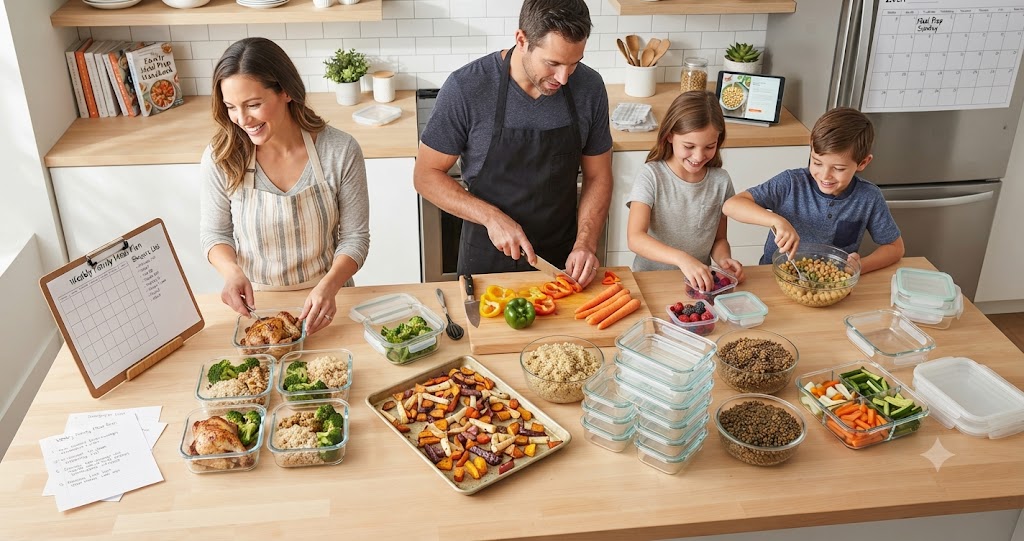
Meal planning for busy families isn’t about rigid perfection; it’s about reducing daily cognitive load through strategic preparation. By focusing on batch cooking, inventory management, and modular ingredient prep, families can reclaim hours each week, minimize food waste, and ensure nutritionally balanced meals during the busiest days.
The Core Philosophy: Why Traditional Planning Fails
Most families approach meal planning as a chore of choosing specific recipes for specific days. This is a trap. If your Tuesday meeting runs long, your “planned” meal becomes a source of guilt rather than a solution.
The “Modular” Shift
Instead of planning fixed meals, move to a component-based system. Prepare building blocks—proteins, roasted vegetables, and complex carbohydrates—that can be mixed and matched.
| Component | Batch Preparation Strategy | Usage Versatility |
| Proteins | Slow-cook or sheet-pan bulk roast | Tacos, salads, grain bowls, stir-fries |
| Vegetables | Blanch or roast at high heat | Sides, soups, omelet mix-ins |
| Grains | Rice cooker or pressure cooker | Burrito bowls, cold salads, stir-fries |
Mastering the Logistics
Success in meal planning is 20% cooking and 80% logistics.
1. The “Zero-Inventory” Audit
Before you plan, look at what you already own. Most families waste money because they buy duplicates of condiments or spices they already have. Spend five minutes documenting your freezer and pantry contents.
2. The Themed Rotation
Decision fatigue is the enemy of consistency. Assign themes to specific days to limit the “what should we eat?” thought process.
- Monday: Meatless (Pasta/Legumes)
- Tuesday: Global (Tacos/Curry/Stir-fry)
- Wednesday: Sheet-Pan (High volume/Low effort)
- Thursday: “Clean Out the Fridge” (Soups/Frittatas)
- Friday: Low-Effort (Pizza/Breakfast for dinner)
Data-Driven Meal Selection
When selecting recipes, use the 15-Minute Rule. If a meal takes longer than 15 minutes of active, “standing-at-the-counter” time, it is not a weekday meal.
Common Bottlenecks and How to Solve Them
- The Mid-Week Slump: By Wednesday, energy is low. Plan your easiest meal for this day.
- Vegetable Decay: Use high-moisture vegetables (greens/cucumbers) early in the week and heartier vegetables (cabbage/carrots/squash) later.
- The Missing Ingredient: Maintain a perpetual digital grocery list. As soon as a staple item (oil, rice, eggs) gets low, add it to the list.
Scaling for Nutrition and Variety
To keep the family engaged, focus on texture and flavor profiles rather than just “getting fed.”
The “Flavor Bridge” Technique
If you make a large batch of neutral protein (e.g., grilled chicken), you can use different sauces to make it feel like an entirely different meal.
- Night 1: Soy-ginger glaze (Asian style)
- Night 2: Salsa verde (Mexican style)
- Night 3: Lemon-herb vinaigrette (Mediterranean style)
This simple shift prevents palate fatigue, which is the primary reason people abandon meal planning.
Troubleshooting Implementation
Even the best plans hit roadblocks. Here is how to handle the inevitable chaos.
What to Do When Everything Goes Wrong
- The “Emergency Shelf”: Keep one meal’s worth of non-perishable ingredients (canned beans, jarred sauce, pasta) that requires zero prep.
- The Freezer Safety Net: If you made extra portions, freeze them immediately in individual containers. These are your “off-days” insurance.
- Accept “Partial Planning”: If planning an entire week is overwhelming, start with planning only three dinners.
Integrating Kids and Partners
Meal planning is a household responsibility, not an individual one. Delegate tasks based on ability.
- Age-Appropriate Participation: Children can wash produce, label containers, or choose between two pre-vetted options.
- Distributed Prep: If one partner does the grocery shopping, the other should be responsible for the initial “wash and chop” phase immediately upon arrival home.
Advanced Systems for Long-Term Sustainability
To move beyond just “surviving” the week, implement these advanced systems.
The “Prep-Once” Weekend Ritual
Set a timer for 90 minutes. Use this time exclusively for:
- Washing/chopping produce.
- Measuring dry ingredients for recurring breakfasts (e.g., overnight oats).
- Portioning snacks into individual containers.
Digital Ecosystems
Use shared lists (like Google Keep or shared notes) to ensure that if a family member uses the last of the milk, it is recorded. Transparency is the only way to keep the planning loop closed.
Cost-Effective Bulk Sourcing
Buying in bulk is only effective if you have a consumption plan. If you buy a 10lb bag of onions, commit to recipes that utilize them immediately (e.g., French onion soup, caramelized onions for topping).
Flavor Profile Mapping
Understand your family’s preferences. If they dislike overly spicy food, don’t force a curry just because it is “healthy.” Modify recipes to fit the flavor profile your family actually consumes to ensure the food is eaten rather than wasted.
Temperature Control
Think about the serving temperature. A mix of hot and cold dishes is often more satisfying than having to reheat everything to high temperatures, which can degrade food quality and texture.
Texture Integrity
When meal prepping for the week, avoid putting dressings on salads until serving. Avoid overcooking vegetables during the initial prep phase. Aim for slightly undercooked so that they reach perfect doneness upon final reheating.
Hydration Planning
Meal planning often overlooks beverages. Keep a pitcher of infused water or cold-brew tea in the fridge. It saves money compared to buying sugary drinks and keeps the family hydrated throughout the week.